How to Extend the Life of Your Garage Door in Colorado

Greeley Hail Season: How to Protect Your Garage Door From Hail Damage
August 17, 2026
Garage Door Problems to Watch for After a Colorado Storm
September 7, 2026How to Extend the Life of Your Garage Door in Colorado
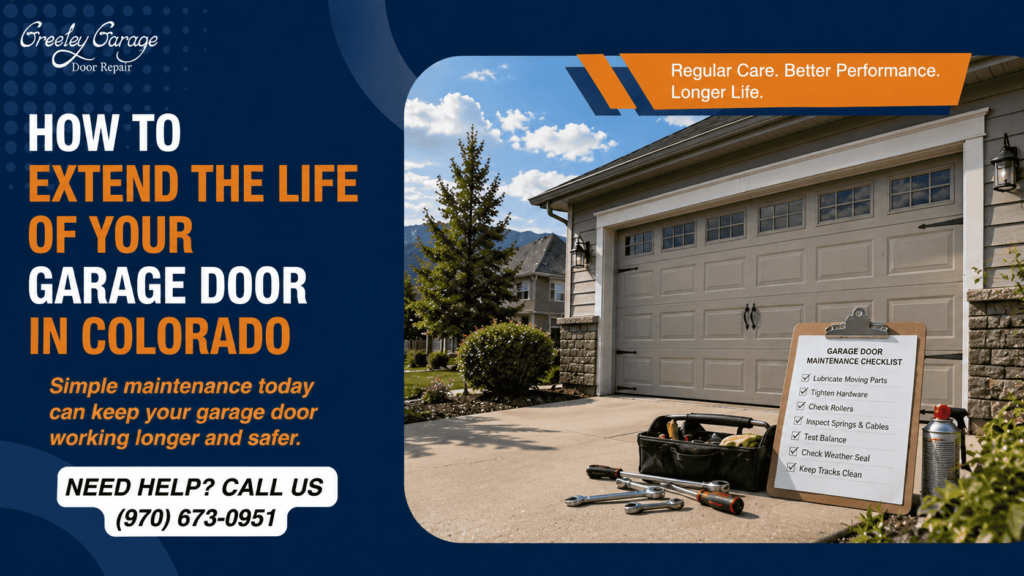
A garage door does a lot of work throughout the year. In Colorado, it also has to deal with changing temperatures, dry air, snow, hail, strong winds, and sudden weather changes. All of these conditions can gradually affect the door and its moving parts.
The good news is that you don’t have to wait until something breaks to take care of your garage door. A little regular attention can help reduce wear, improve performance, and potentially extend the useful life of the entire system.
Here are some practical ways Colorado homeowners can keep their garage doors working properly for years to come.
-
Pay Attention to How Your Garage Door Sounds
Your garage door can often tell you when something isn’t right.
A healthy door should generally move smoothly without excessive grinding, scraping, banging, or rattling. If you suddenly notice a new sound, don’t simply turn up the radio and ignore it.
Unusual noises can be related to worn rollers, loose hardware, track problems, hinges, or other components.
Catching these issues early can prevent a small repair from becoming a much bigger one.
-
Keep the Garage Door Tracks Clean
The tracks guide your garage door as it moves up and down. Dirt, leaves, small stones, and other debris can accumulate around the tracks, particularly after windy weather.
Take a quick look at the tracks from time to time and remove anything that shouldn’t be there.
However, avoid bending or adjusting the tracks yourself. If a track looks damaged, loose, or out of alignment, it’s better to have a professional take a look.
-
Don’t Ignore Worn Rollers
Rollers have an important job: they allow the garage door sections to travel along the tracks.
As rollers age, they can become noisy, worn, cracked, or difficult to move. Damaged rollers can also make the opener work harder than necessary.
If your garage door has become noticeably louder or doesn’t move as smoothly as it used to, the rollers are one of the components worth checking.
-
Keep an Eye on the Weather Seal
Colorado weather can be tough on rubber and other sealing materials. The bottom seal of your garage door can become hard, cracked, flattened, or brittle over time.
A damaged seal may allow cold air, rain, snow, dust, and pests to enter the garage.
Check the seal periodically for visible damage and make sure it still makes reasonable contact with the floor when the door is closed.
Replacing a worn seal is a relatively simple maintenance task compared with dealing with damage caused by long-term moisture or exposure.
-
Protect Your Garage Door From Storm Debris
Strong Colorado winds can move branches, outdoor furniture, gardening equipment, and other objects around your property.
Before a severe storm, secure loose items around the garage. Something that seems harmless on a calm day can become a damaging projectile when strong winds arrive.
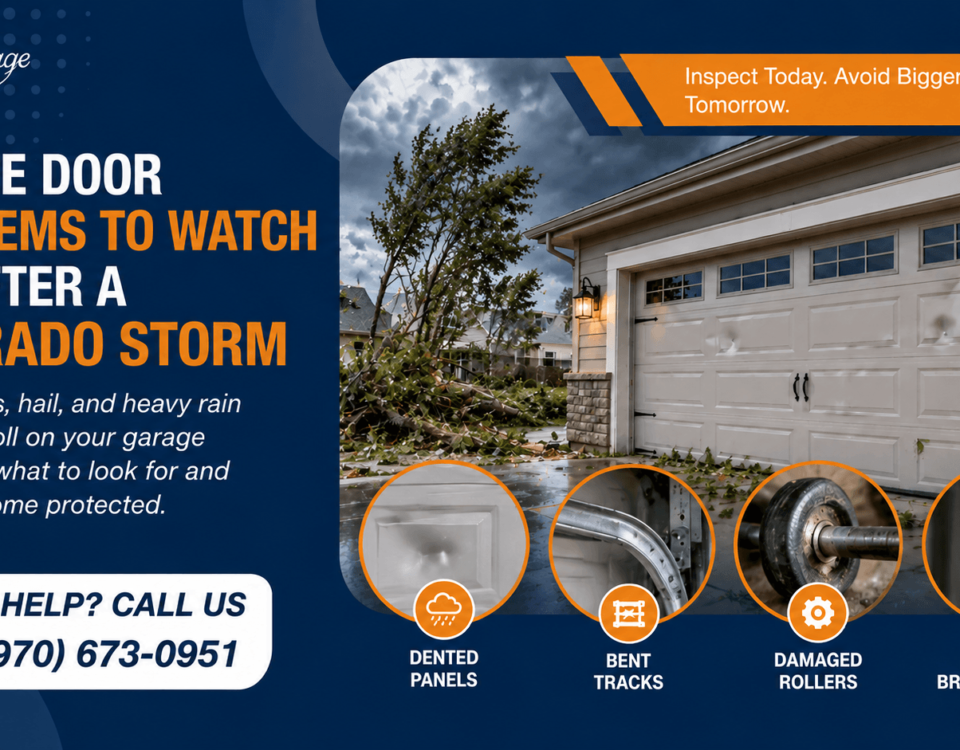
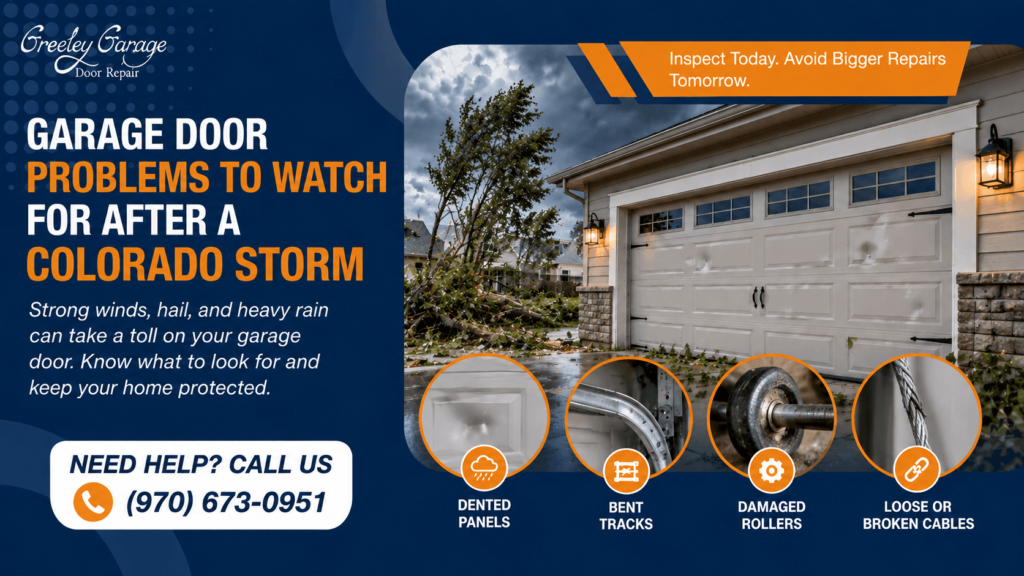
After a storm, inspect the door for dents, scratches, bent sections, broken windows, or other signs of impact.
Even if the door still works, visible damage is worth having checked.
-
Keep the Door and Its Hardware in Good Condition
Garage doors have many moving and connecting parts, including hinges, rollers, brackets, cables, springs, and other hardware.
Over time, normal use can cause components to loosen or wear.
A basic visual inspection can help you notice obvious problems before they affect the way the door operates. If you see loose hardware, damaged cables, a broken spring, or another serious issue, don’t attempt a repair unless you have the appropriate experience.
Some garage door components are under significant tension and can be dangerous to handle.
-
Don’t Put Extra Weight on the Garage Door
It’s tempting to hang items from a garage door or use it as a convenient place to store equipment. However, adding unnecessary weight can affect the balance and operation of the door.
Your garage door system is designed around a specific weight and balance. If you add weight or make modifications, the opener and other components may have to work harder.
Keep storage items off the moving sections of the door unless they are specifically designed for that purpose.
-
Watch for Changes in Door Balance
A properly functioning garage door should move in a controlled and reasonably balanced manner.
If the door suddenly feels much heavier than usual when operated manually, drops quickly, rises unevenly, or doesn’t stay in position as it should, there could be an issue with the spring or another part of the counterbalance system.
Don’t try to adjust garage door springs yourself. Springs can store a large amount of energy, and improper handling can result in serious injury.
Instead, have a qualified garage door technician inspect the system.
-
Take Colorado’s Temperature Changes Seriously
Colorado can experience significant temperature swings throughout the year. Moving between hot summer conditions and cold winter temperatures can affect materials, lubricants, seals, and other garage door components.
You may notice changes in how your door sounds or moves as the seasons change.
This is one reason seasonal inspections can be useful. A quick check before winter and again before the warmer months can help identify components that are beginning to show excessive wear.
-
Don’t Overwork Your Garage Door Opener
Your garage door opener is responsible for moving a heavy door several times a day. If the door itself isn’t moving correctly, the opener may have to work harder than it should.
For example, a door with worn rollers, damaged tracks, or a mechanical problem can place additional strain on the opener.
If the motor suddenly sounds different, struggles to lift the door, stops unexpectedly, or reverses without an obvious reason, don’t assume the opener itself is the only problem.
The door and its mechanical components should also be inspected.
-
Schedule Professional Maintenance
Homeowners can handle basic visual checks, but professional maintenance can identify problems that aren’t always obvious.
A garage door technician can inspect the overall system, including the tracks, rollers, springs, cables, hinges, opener, and other components.
Regular maintenance is particularly useful if your garage door is older, gets heavy daily use, or has already started showing signs of wear.
Finding a worn component early may help you avoid an unexpected breakdown when you need the garage door most.
-
Deal With Small Problems Before They Become Major Repairs
One of the simplest ways to extend the life of your garage door is to take unusual behavior seriously.
A small squeak may not seem important. A slightly slow door may still be usable. A small gap under the door might not appear urgent.
But these can be early indications that something needs attention.
Instead of waiting until the door stops working completely, have unusual noises, movement, or visible damage checked when you first notice them.
A Simple Colorado Garage Door Maintenance Routine
You don’t need to spend hours maintaining your garage door. A simple routine can go a long way.
Every few months:
- Look over the door panels for damage.
- Check the weather seal.
- Clear debris around the tracks.
- Listen for new or unusual noises.
- Watch the door while it opens and closes.
- Check for visible loose or damaged components.
Before severe weather:
- Secure loose objects around the garage.
- Make sure the door closes properly.
- Check for existing damage.
- Keep the garage door area clear.
When something doesn’t look or sound right:
- Stop repeatedly operating the door.
- Don’t attempt repairs involving springs or cables.
- Arrange for a professional inspection.
When Is It Time to Call a Garage Door Professional?
Some garage door problems are easy to recognize, while others require professional diagnosis. You should consider calling a technician if your door is off track, has a broken spring or cable, makes loud mechanical noises, becomes difficult to lift, has damaged panels, or if the opener is struggling.
Professional attention can also be worthwhile when an older garage door has several problems at the same time. In some cases, repairing individual components makes sense; in others, replacing the door may provide a better long-term solution.
The goal isn’t simply to keep the door running today. It’s to keep the entire system operating safely and reliably over the long term.
Keep Your Garage Door Working Longer With Greeley Garage Door Repair
Colorado weather and everyday use can gradually wear down your garage door, but regular care can help extend its service life. If your garage door is making unusual noises, operating unevenly, showing storm damage, or simply needs professional maintenance, Greeley Garage Door Repair is ready to help. We provide garage door repair and maintenance services in Greeley, Colorado, including panel repair, broken spring service, off-track door repair, roller and cable problems, weather seal replacement, and garage door opener service. Contact Greeley Garage Door Repair for professional, dependable service to help keep your garage door working safely and smoothly.