Garage Door Problems to Watch for After a Colorado Storm

How to Extend the Life of Your Garage Door in Colorado
August 26, 2026Garage Door Problems to Watch for After a Colorado Storm
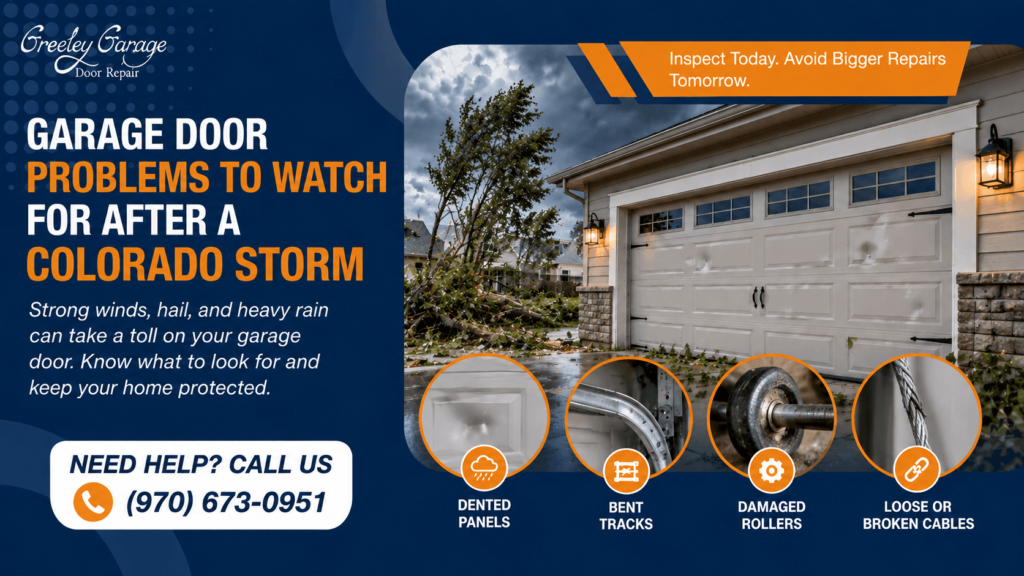
Colorado storms can arrive quickly and bring strong wind, heavy rain, hail, snow, and flying debris. While homeowners often check their roofs, windows, trees, and fences after a storm, the garage door is another part of the home that can take a surprising amount of damage.
Even when a garage door still opens and closes, storm-related damage may not be immediately obvious. A slightly bent track, damaged roller, loose cable, or dented panel can become a larger problem if the door continues to operate normally without being inspected.
For homeowners in Greeley, taking a few minutes to check the garage door after severe weather can help identify potential problems before they turn into an unexpected repair.
How Can a Colorado Storm Damage a Garage Door?
Garage doors are exposed to the elements, particularly when they face an open driveway or remain partially open during bad weather. Strong wind can push against the door and place stress on its panels, tracks, rollers, and supporting hardware.
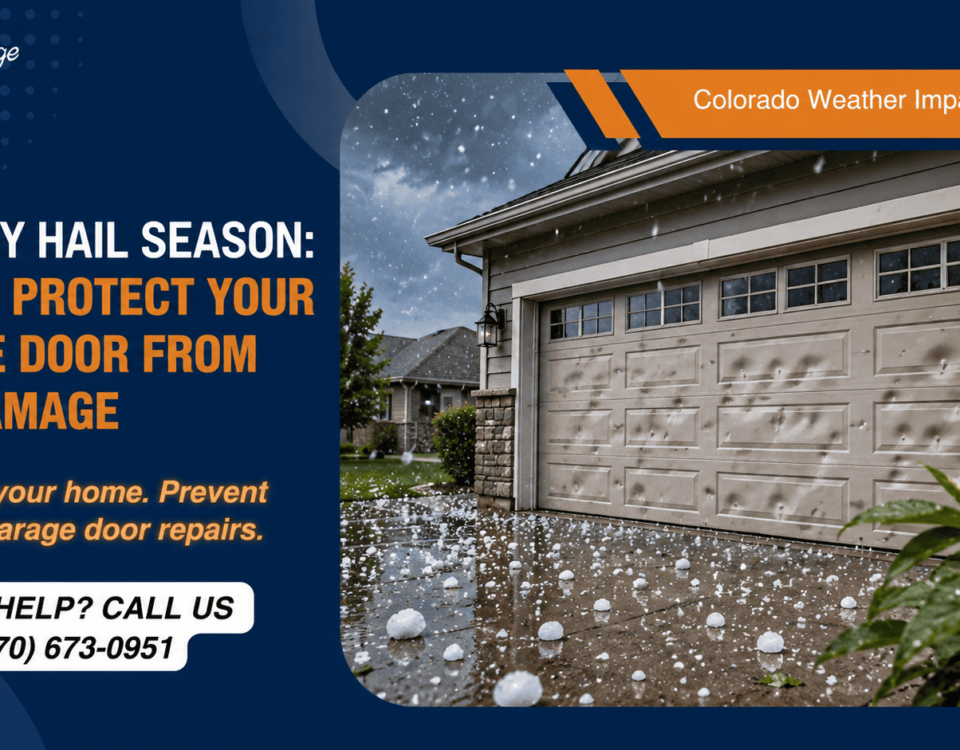
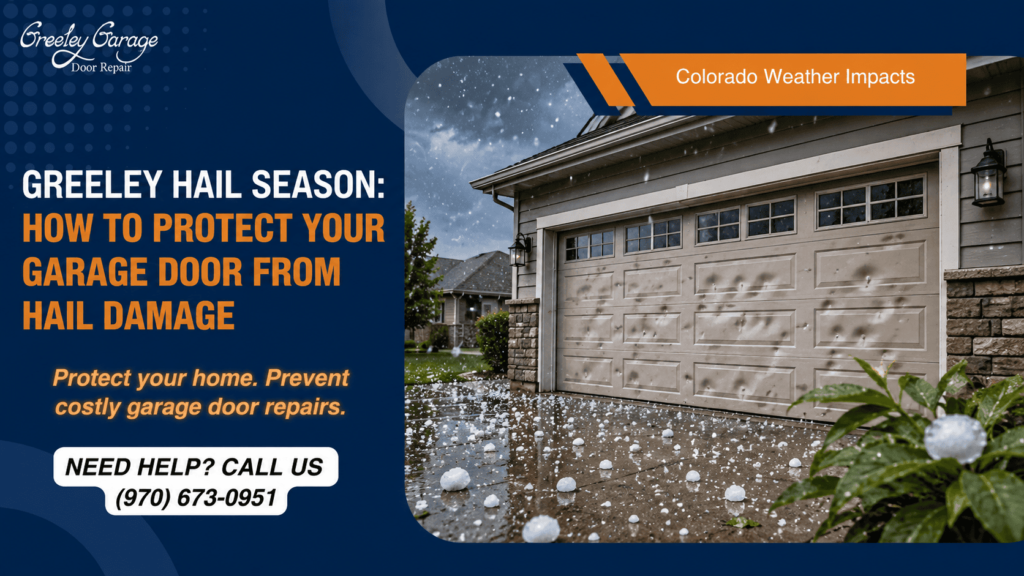
Hail can dent panels or damage windows, while debris can strike the door or interfere with the tracks. Heavy moisture may also contribute to rust or affect components that were already showing signs of wear.
The severity of the damage depends on the type of storm, the condition of the garage door, and whether the door was open or closed when the weather arrived.
-
Bent or Misaligned Garage Door Tracks
The tracks guide the rollers as the garage door moves. They need to remain properly positioned for the door to travel smoothly.
Strong winds, flying debris, or an impact can bend or shift a track. You may notice:
- The door moving unevenly
- Scraping or grinding sounds
- Rollers struggling to move
- The door stopping partway
- A noticeable separation or distortion along the track
Don’t try to force a door through a damaged track. Continued operation can put additional stress on the rollers and other hardware.
-
Damaged or Dented Garage Door Panels
Hail and airborne debris can leave dents in garage door panels. Some damage may be purely cosmetic, but larger dents can affect the door’s balance and movement.
A damaged panel may also interfere with hinges, rollers, or the way individual sections move.
After a severe hailstorm, look closely at the entire garage door rather than only checking for major dents. Small cracks, loose hardware, damaged windows, or sections that no longer sit evenly can also be signs that the door needs attention.
-
Garage Door Rollers May Be Damaged
Rollers are small but important components that allow the door to travel through its tracks.
A storm-related impact or debris entering the track can damage a roller or cause it to move out of position. Damaged rollers may produce unusual squeaking, grinding, rattling, or popping noises.
If the door suddenly sounds different after a storm, don’t assume the noise is harmless. A damaged roller can affect the way the entire door moves.
-
Loose or Damaged Garage Door Cables
Garage door cables help transfer the lifting force through the door system. If a cable becomes loose, damaged, or comes off its drum, the door may become uneven or difficult to operate.
One side of the garage door may sit lower than the other, or the door may stop moving correctly.
Cable problems can be dangerous because garage door systems can contain significant stored mechanical energy. If a cable appears loose or broken, avoid attempting to put it back into place yourself.
-
Problems With Garage Door Springs
Garage door springs are responsible for helping counterbalance the weight of the door. A storm doesn’t necessarily cause a spring to fail, but severe weather can expose a spring that was already worn or nearing the end of its service life.
After a storm, pay attention if the door suddenly feels much heavier than usual or the opener seems to struggle.
A broken spring may prevent the door from operating normally. Because springs are under substantial tension, spring repairs should be handled by a qualified garage door professional.
-
Debris Can Block the Garage Door Tracks
Leaves, branches, dirt, and other debris can end up around the garage door after a storm.
Even a small object in the wrong location can interfere with the rollers or prevent the door from moving smoothly.
Before operating the door after severe weather, visually check the area around the tracks and doorway. Remove loose debris from areas that are safe to reach, but don’t attempt to disassemble or adjust the track system.
-
Garage Door Opener Problems After a Storm
Storm damage isn’t always limited to the physical door.
Power interruptions, electrical surges, moisture, or physical damage can also affect a garage door opener. You may notice that the opener has power but doesn’t respond normally, the remote stops working, or the door reverses unexpectedly.
If the opener behaves differently after a storm, check whether other electrical equipment in the home is working normally. If the garage door system continues to malfunction, professional troubleshooting may be necessary.
-
Water and Moisture Can Cause Problems
Heavy rain and melting snow can expose areas of the garage door system to moisture.
Water itself doesn’t necessarily cause immediate failure, but repeated exposure can contribute to rust and deterioration of certain metal components. Door seals can also become worn or damaged over time.
Check the bottom seal and visible hardware for signs of deterioration, especially after significant weather.
-
The Garage Door May No Longer Be Properly Balanced
A garage door should move in a controlled and balanced manner. If a storm damages a panel, spring, cable, roller, or track, the balance of the system may change.
A door that suddenly feels heavier, drops faster than usual, or appears uneven should not be ignored.
Balance problems can put additional strain on the opener and other components. It’s better to have the system inspected than to continue using a door that doesn’t behave normally.
Signs Your Garage Door Needs an Inspection After a Storm
Some storm damage is obvious, while other problems show up through changes in how the door operates.
Consider having the garage door inspected if you notice:
- New dents or cracks in the door
- Bent or separated tracks
- Unusual grinding or scraping sounds
- Rollers that appear out of position
- A loose or broken cable
- A damaged spring
- The door becoming unusually heavy
- The opener struggling to lift the door
- The door stopping or reversing unexpectedly
- The door is uneven, with one side positioned higher than the other.
- The door shaking during operation
You don’t need to wait for the garage door to stop working completely before getting it checked.
Should You Operate a Garage Door After a Storm?
If the door looks normal and operates normally, there may not be a problem. However, if you see obvious damage or notice a significant change in how the door moves, it’s safer to stop using it.
Avoid repeatedly activating the opener to see whether the door will eventually work. If something is bent, disconnected, or out of alignment, additional operation can make the damage worse.
Keep children and vehicles away from a damaged garage door until the situation has been evaluated.
What Homeowners Can Safely Check
A basic visual inspection can help you spot obvious problems.
From a safe position, look at:
- Garage door panels
- Visible tracks
- Rollers
- Hinges
- Bottom seal
- Cables
- Springs
- Opener operation
- Debris around the garage doorway
The goal is to identify visible damage—not to repair tensioned components.
Don’t remove springs, adjust cables, bend tracks back into place, or attempt major repairs without the appropriate training and equipment.
How to Reduce Storm-Related Garage Door Problems
You can’t control the weather, but regular maintenance can help keep your garage door in better condition before severe weather arrives.
Check for worn rollers, loose hardware, damaged seals, and unusual noises during normal use. Addressing small problems early can reduce the likelihood of a minor issue becoming a larger failure.
It’s also a good idea to keep objects that could become airborne during strong winds away from the immediate area around the garage.
If a storm is approaching and your garage door is partially open, close it if it is safe to do so. A closed and properly functioning garage door generally provides a more secure barrier against wind and debris than an open door.
What to Do If Your Garage Door Is Damaged After a Storm
Start with a visual inspection and avoid operating the door if you see significant damage.
If the door is stuck, crooked, off its tracks, or has a broken cable or spring, don’t try to force it open or closed. Keep people away from the damaged system and arrange for a professional inspection.
Taking action early can help prevent additional damage to the garage door opener, tracks, rollers, and other components.
Garage Door Storm Damage Repair in Greeley
If your garage door has been affected by high winds, hail, debris, or other severe weather, Greeley Garage Door Repair can inspect the system and help identify the source of the problem. From damaged tracks and rollers to springs, cables, panels, and opener issues, getting storm-related garage door problems checked promptly can help restore safe and dependable operation for your Greeley home.