Why Does My Garage Door Hum but Not Move? (Capacitor vs. Motor Issues)

Wall-Mounted (Jackshaft) Openers: Are They Better Than Ceiling Mounts?
December 23, 2025
The R-Value Explained: Choosing the Best Garage Door for Cold Climates
January 16, 2026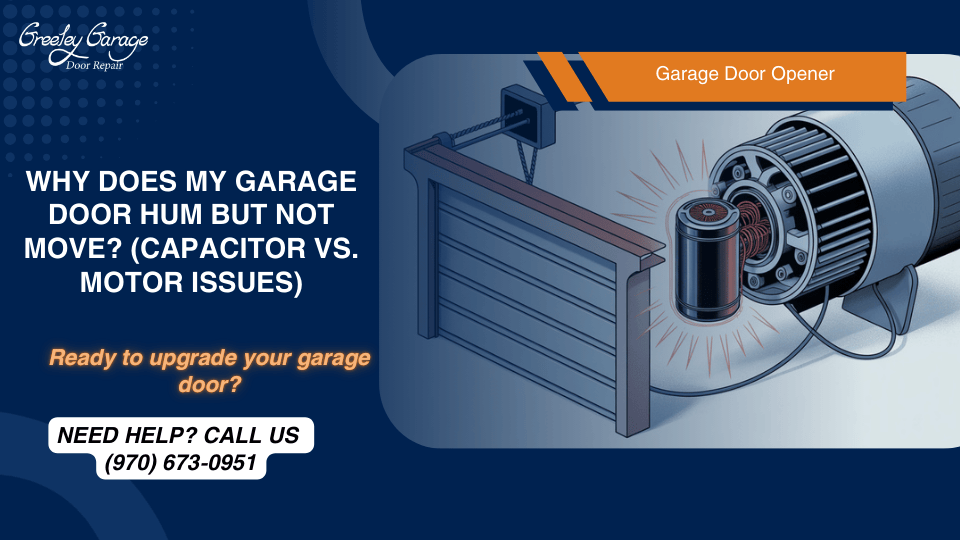
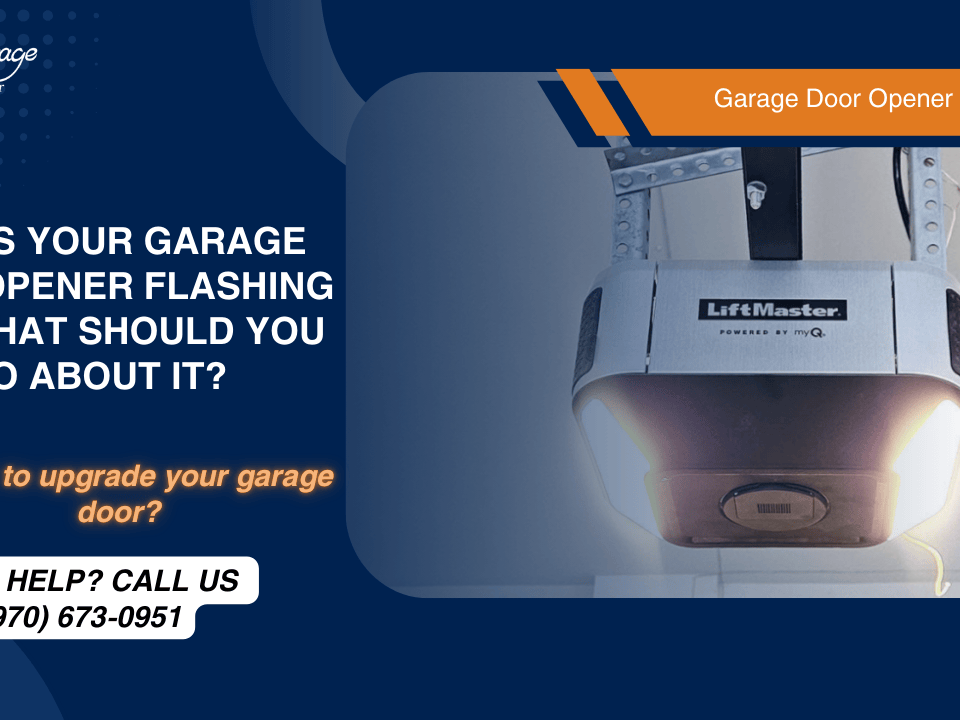
If your garage door hums when you press the remote but doesn’t move, you’re not alone. This is a common homeowner complaint—and it usually points to an electrical or mechanical problem inside the garage door opener. In most cases, the issue comes down to a failing capacitor or a worn-out motor, though a few other components can contribute as well.
This guide explains why the humming happens, how to tell the difference between capacitor vs. motor issues, and what steps you should take next—written in clear, homeowner-friendly language and optimized for search visibility.
What Does a Humming Garage Door Mean?
When you hear a humming or buzzing sound, it means power is reaching the opener, but the system can’t complete the motion. The opener is trying to work, but something is preventing the motor from turning the drive mechanism.
Think of it like a car engine that gets electricity but can’t start because a critical component has failed.
The Two Most Common Causes: Capacitor vs. Motor
Failed or Weak Capacitor (Most Common Issue)
The capacitor is a small but vital part that gives the motor the initial surge of energy it needs to start moving. When the capacitor goes bad, the motor receives power but can’t generate enough torque to begin turning.
Signs of a Bad Capacitor:
- Humming sound with no door movement
- Door may move if you manually help lift it
- Opener worked fine recently, then suddenly stopped
- No burning smell or visible damage
Capacitors often fail due to age, heat, or power surges. This is one of the most frequent reasons a garage door hums but doesn’t open.
Good news: Capacitor replacement is usually quick and affordable compared to motor replacement.
Burnt-Out or Failing Motor
If the motor itself is damaged, it may hum but lack the strength to turn the opener’s internal gears.
Signs of Motor Problems:
- Persistent humming even after capacitor replacement
- Burning or electrical smell
- Opener is old and heavily used
- Door doesn’t move even with manual assistance
- Opener shuts off after a few seconds
Motors typically fail due to long-term wear, overheating, or excessive strain from heavy or unbalanced doors.
Important: A failing motor usually means higher repair costs and, in some cases, full opener replacement is more cost-effective.
Other Possible Causes You Shouldn’t Ignore
While capacitor and motor issues are the main culprits, the humming sound can also come from:
- Jammed or Broken Gears
Stripped internal gears can stop motion while the motor continues trying to run.
- Seized Door or Track Obstruction
If the door is physically stuck, the opener may hum as it struggles against resistance.
- Broken Garage Door Springs
A door with broken springs becomes extremely heavy, preventing the opener from lifting it.
- Electrical Issues
Loose wiring or failing circuit boards can send power inconsistently to the motor.
How to Safely Diagnose the Problem
Before calling a professional, you can do a few basic checks:
- By pulling the emergency release cord, you can manually lift the door
- If it lifts easily → likely a capacitor or motor issue
- If it’s very heavy → spring problem
- Listen closely
- Brief hum, then silence → capacitor
- Continuous hum → motor or gear issue
- Check the opener age
- Over 10–15 years old → motor wear is more likely
⚠️ Do not open the motor housing unless you are trained. Capacitors store electrical energy and can be dangerous.
Should You Repair or Replace the Opener?

A professional inspection ensures you don’t replace parts unnecessarily.
Preventing Future Garage Door Opener Problems
To avoid humming and sudden failures:
- Lubricate door rollers and hinges twice a year
- Ensure the door stays balanced
- Avoid forcing the opener if the door feels heavy
- Schedule annual garage door maintenance
- Use a surge protector for the opener
Preventive care reduces strain on both the capacitor and motor, extending the life of your system.
Final Thoughts
A garage door that hums but doesn’t move is usually a warning sign, not a total failure—yet. In most cases, the issue is a failing capacitor, but worn motors, broken springs, or internal gear damage can also be responsible.
If you’re searching for a reliable garage door solution, don’t wait for the problem to get worse. Call us (970) 673-0951 or contact us today for expert inspection, fast repairs, and dependable service you can trust. We’re here to get your garage door working smoothly again.