
The R-Value Explained: Choosing the Best Garage Door for Cold Climates

Why Does My Garage Door Hum but Not Move? (Capacitor vs. Motor Issues)
January 12, 2026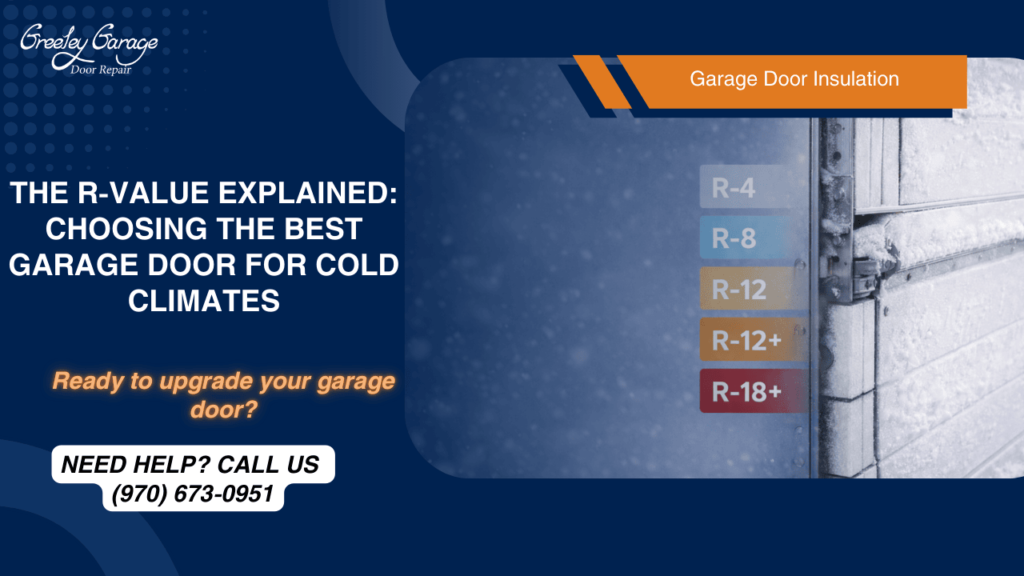
Winter in a cold climate brings specific challenges: freezing mornings, icy windshields, and skyrocketing heating bills. While many homeowners rush to insulate their attics or upgrade their windows, they often overlook the largest opening in their home—the garage door.
If you have an attached garage or a living space above it, a standard, uninsulated metal door acts as a massive thermal leak. To keep the cold out and the heat in, you need to understand one crucial metric: The R-Value.
This guide will demystify garage door insulation and help you choose the best defense against freezing temperatures.
What Exactly is R-Value?
In simple terms, R-Value measures thermal resistance. It indicates how well a barrier (like your garage door) resists the flow of heat.
- The Higher the Number, the Better: A higher R-Value means the door has better insulating properties.
- The Benefit: It keeps the heat inside your garage during winter and prevents the hot summer air from getting in during warmer months.
Think of R-Value like a winter coat. A thin windbreaker might have a low R-Value (R-2), while a thick, down-filled parka has a high R-Value (R-16). In a cold climate, you need the parka.
Why Garage Door Insulation Matters in Cold Climates
The garage is just a garage, so why should it be warm?“ Nevertheless, poorly insulated doors affect far more than just the garage.
Energy Efficiency for the Whole Home
If your garage is attached to your house, it acts as a buffer zone. A freezing garage sucks heat from the adjacent rooms through the shared walls and the door leading into the house. By increasing the garage’s temperature, you reduce the workload on your home’s furnace.
Protecting the “Room Above”
The most notoriously cold room in many houses is the bedroom or “bonus room” situated directly above the garage. Cold air rises from the garage ceiling into the floor of the room above. A high R-Value door is essential to keep this floor warm.
Vehicle and Gear Protection
Extreme cold is tough on cars. It thickens fluids, reduces tire pressure, and saps battery life (an electric vehicle’s range can drop significantly in freezing temps). An insulated garage keeps the temperature just high enough to protect your vehicle and any paints, glues, or chemicals you store there.
The Two Types of Insulation: Polystyrene vs. Polyurethane
Not all insulated doors are created equal. Manufacturers generally use two types of foam insulation, and the difference affects both the price and the R-Value.
Polystyrene (Styrofoam)
This is the entry-level option. It involves rigid panels of foam inserted between the steel layers of the door (or bonded to a single layer).
- R-Value Range: Typically R-6 to R-9.
- Pros: Affordable and easy to find.
- Cons: Gaps can remain between the foam and the door frame; less structural rigidity.
- Verdict: Good for detached garages or mild winters.
Polyurethane (Foam-in-Place)
This is the gold standard for cold climates. The manufacturer injects liquid foam between the steel skins of the door. The foam expands to fill every nook and cranny before hardening, bonding the two metal skins together.
- R-Value Range: Typically R-10 to R-20+.
- Pros: Incredible thermal efficiency; makes the door solid, dent-resistant, and quieter to operate.
- Cons: More expensive upfront.
- Verdict: Essential for attached garages in regions with heavy snow and freezing temps.
Which R-Value Do You Need?
To make the best investment, match the R-Value to your specific living situation:

The Missing Link: Air Leaks and Thermal Breaks
Buying an R-18 door is useless if the wind whistles through the cracks. For true cold-weather performance, you must look beyond the R-Value number:
- Weatherstripping: Ensure the door has high-quality bottom seals and perimeter weatherstripping to stop drafts.
- Thermal Breaks: Look for a door that features a thermal break—a strip of rubber or plastic that separates the interior metal skin from the exterior metal skin. Your garage is protected from the cold by this metal frame.
Conclusion
In cold climates, a garage door is more than just an entry point; it is a movable wall. While a high R-Value door made with polyurethane insulation costs more upfront, the return on investment is immediate through lower heating bills, a warmer car, and a more comfortable home.
Don’t let the cold in this winter—check your R-Value.